What is Telescopic Cylinders Underbody and Their Applications?
Telescopic Cylinders Underbody play a vital role in various mechanical applications. These specialized devices are essential for providing extended reach and compact storage in heavy machinery. The design allows for multiple cylinders to nest within each other, maximizing space efficiency and functionality.
In industries such as construction, automotive, and manufacturing, Telescopic Cylinders Underbody are applied extensively. They help optimize hydraulic systems, allowing for smooth operation under significant loads. This adaptability is crucial for enhancing equipment performance and ensuring worker safety.
While the benefits are substantial, it is important to recognize potential challenges. Not all applications may be suitable for telescopic cylinder use. Engineers need to assess specific requirements and limitations carefully. Quality control and maintenance also play a significant role in the effectiveness of these systems. Ensuring reliability can be complex but is necessary for any successful application.
What are Telescopic Cylinders and Their Structure?
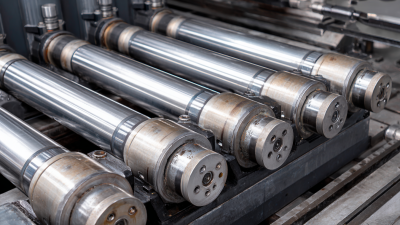
Telescopic cylinders are unique hydraulic devices that can extend to various lengths. Their structure includes multiple nested tubes, allowing for compact storage. When extended, they provide significant force while maintaining a lightweight design. This feature makes them versatile for various applications, from construction to automotive industries.
The design typically involves an outer cylinder housing several inner tubes. Each tube has a specific diameter, facilitating smooth extension and retraction. Due to their mechanical complexity, proper alignment and maintenance are crucial for performance. Users must pay attention to wear and tear in high-frequency applications.
Despite their advantages, telescopic cylinders can face challenges. They may experience issues like hydraulic leaks or sticking, which require troubleshooting. These devices need regular inspections to ensure longevity. Understanding their structure and the potential problems can lead to improved reliability and efficiency in their applications.
Understanding the Working Principle of Telescopic Cylinders
Telescopic cylinders are essential in many applications, providing powerful linear motion in compact spaces. Their design allows for multiple nested cylinders, which can extend and retract effectively. This configuration offers significant advantages in space-saving, making them ideal for various industries, including construction and material handling.
According to the Market Research Future report, the global hydraulic cylinder market is expected to reach $19.1 billion by 2025, largely driven by advancements in telescopic technology.
Understanding the working principle of telescopic cylinders is vital. These cylinders operate via hydraulic fluid, which is pumped into the cylinder to create pressure. This pressure forces the inner tubes to extend or contract, allowing for precise control of movement. A report from Technavio indicates that the demand for these cylinders is forecasted to grow due to increasing automation in industries. However, operational challenges, such as potential fluid leakage and the need for regular maintenance, must be acknowledged. They can impact the efficiency and reliability of the equipment.
In practical use, telescopic cylinders often encounter issues such as sealing failures or pressure loss. Regular inspections can mitigate these risks. Despite their advantages, some designs may suffer from stability problems under heavy loads. Users need to evaluate these factors to optimize performance. The balance between design efficiency and reliability remains a key consideration in this evolving field.
Common Applications of Telescopic Cylinders Underbody
Telescopic cylinders underbody have become essential in numerous industries, particularly in construction and transportation. These hydraulic systems allow for the compact retraction and extensive extension of the cylinder, maximizing efficiency in tight workspaces. According to recent industry reports, the use of telescopic hydraulic cylinders is expected to grow by approximately 7% annually through 2025.
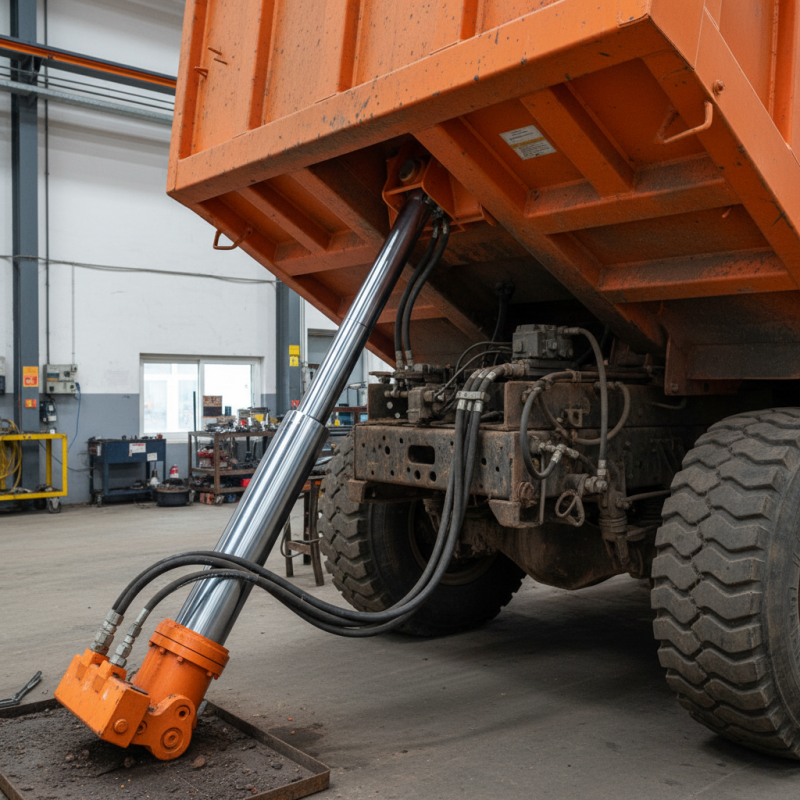
Common applications include dump trucks, where telescopic cylinders enable the quick unloading of materials. Companies benefit from quicker cycle times, enhancing productivity. In construction, these cylinders facilitate heavy lifting, providing stability for cranes and aerial work platforms. Their versatility has led to adaptations in specialized vehicles, such as mobile derricks and ambulances, where space-saving is crucial.
However, the reliance on telescopic cylinders can present challenges. Issues may arise if these systems are not properly maintained, leading to hydraulic failures or inefficiencies in operation. Regular inspections and timely repairs are vital to sustain their performance. The need for skilled technicians is evident, especially as technology advances. An increase in remote monitoring and diagnostics is also observed, aiming to reduce potential downtime.
Advantages of Using Telescopic Cylinders in Various Industries
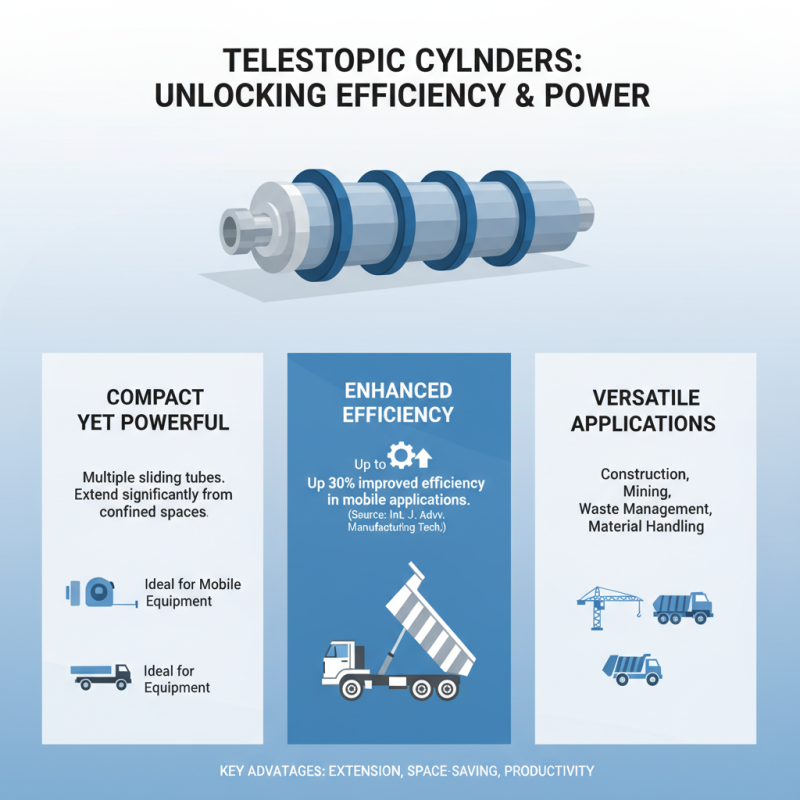
Telescopic cylinders are crucial in various industries for their unique features. They consist of multiple tubes that slide into each other, allowing for significant extension capabilities. This design is especially beneficial in confined spaces where traditional cylinders cannot fit. According to a recent industry report by the International Journal of Advanced Manufacturing Technology, telescopic cylinders enhance efficiency by up to 30% in mobile equipment applications.
One notable advantage is their ability to handle heavy loads while maintaining a compact form. This is vital in construction and logistics. For instance, the ability to lift a load of 5 tons within a restricted height can save both time and resources. Moreover, these cylinders are designed to operate smoothly even under high-pressure conditions, leading to a reduced risk of breakdowns. However, maintenance is crucial. Neglect can lead to significant performance issues, demonstrating the need for regular inspections.
In agriculture, telescopic cylinders are used in machinery like harvesters. Their versatility allows equipment to adapt to different tasks easily. A report from the Agricultural Engineering International noted an increase in productivity by 15% when using telescopic systems in farm equipment. Such metrics highlight their effectiveness but also stress the importance of proper application and design considerations in achieving optimal results.
Maintenance and Safety Considerations for Telescopic Cylinders
Telescopic cylinders are critical components in various machinery. Proper maintenance is vital to ensure their efficient function. Regular inspections are essential. Check for signs of wear, leaks, or damages. These checks should happen monthly or according to the manufacturer’s guidelines.
Safety is another key area of focus. Operators must be trained in handling telescopic cylinders. Misuse can lead to serious injuries. Personal protective equipment is necessary while working with these components. Establishing safety protocols prevents accidents. Often, operators may overlook basic safety checks, leading to hazardous situations.
Moreover, understanding the environment where the cylinders operate is crucial. Extreme temperatures or corrosive substances can affect performance. Operators need to assess conditions regularly. It’s important to remember that even the smallest oversight can have significant consequences. Continuous learning about maintenance techniques enhances safety and reliability. Regular training sessions can address common errors and improve overall safety awareness.