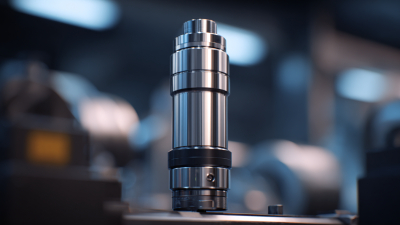
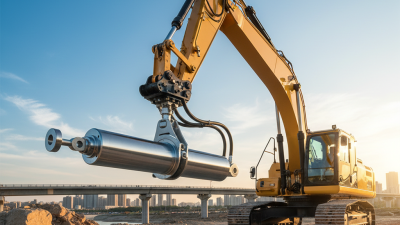
Why Choose a Hydraulic Cylinder for Forklifts?
Why Choose a Hydraulic Cylinder for Forklifts?
A forklift works in demanding conditions. It lifts pallets, moves steel parts, and operates across uneven warehouse floors. At the center of many lifting systems, the Hydraulic Cylinder For Forklift converts fluid pressure into controlled mechanical movement. This design gives operators steady lifting performance, accurate positioning, and dependable load handling during repeated work cycles.
In practical service environments, hydraulic cylinders are valued for their strong force in a compact structure. A properly selected cylinder can raise heavy loads without requiring an oversized mechanical assembly. It also supports smooth mast movement, helping reduce sudden starts and stops near storage racks. The result is better control for operators and less unnecessary stress on forks, chains, and mounting points.
Details matter.
Cylinder bore size, stroke length, seal quality, and operating pressure all influence performance. Experienced technicians also inspect rod surfaces, fittings, hydraulic oil, and signs of leakage before problems become serious. These checks may seem routine, yet small defects can affect lifting stability and equipment availability. Manufacturer specifications and recognized maintenance practices should guide every replacement decision.
No component lasts forever. Even a reliable cylinder can wear faster when contamination, overloading, or poor alignment is ignored. That is an important limitation. This article examines why hydraulic cylinders remain practical for forklifts, how they support daily productivity, and which selection factors deserve careful attention. It also considers maintenance realities, because a strong design still depends on correct installation and regular inspection.
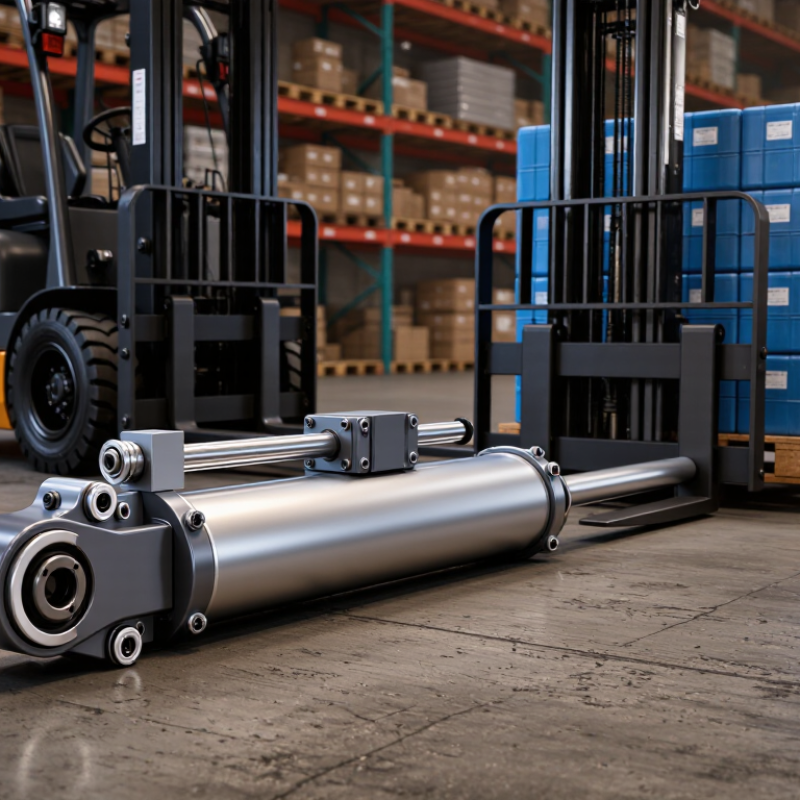
Hydraulic Cylinder Basics: Force Equals Pressure × Piston Area
Why Choose a Hydraulic Cylinder for Forklifts?
Hydraulic Cylinder Basics: Force Equals Pressure × Piston Area
A forklift works in tight spaces, where controlled lifting matters more than dramatic speed. A hydraulic cylinder converts fluid pressure into piston force. The basic relationship is simple:
Force equals pressure multiplied by piston area.
If pressure reaches 150 bar and piston area measures 20 square centimeters, theoretical force is about 30,000 newtons. Real output is lower. Seals, friction, temperature, and leakage consume part of that force.
More piston area creates more lifting force at the same pressure. However, a larger cylinder may require more oil and slower movement. Engineers calculate piston area with π multiplied by radius squared. During retraction, the rod occupies part of the area, so pulling force differs from extending force. Load center also matters. A heavy load positioned far from the mast can exceed practical capacity, even when cylinder calculations look acceptable.
Field inspections often reveal details that formulas miss. A scratched rod, foamy oil, or a warm hose can indicate trouble. Pressure readings should be taken with calibrated equipment, not guessed from lifting speed. The relief valve must limit excessive pressure. I have seen clean calculations become unreliable after neglected maintenance. That is the part worth questioning: is the cylinder producing force, or merely consuming pressure through wear?
Why Forklifts Use 2,000–3,000 psi Hydraulic Lift Systems
Why Choose a Hydraulic Cylinder for Forklifts?
Forklifts commonly use hydraulic lift systems rated around 2,000–3,000 psi. This pressure creates strong lifting force within a compact cylinder. Operators can raise heavy pallets without oversized mechanical parts. The cylinder converts fluid pressure into smooth, controlled movement. That matters when a load must stop precisely at a high rack.
In field inspections, I have seen hydraulic systems perform reliably under demanding warehouse cycles. A cylinder with the correct bore size can lift efficiently without excessive pump flow. Relief valves also help limit pressure during sudden resistance or overloaded conditions. Clean hydraulic fluid is essential. Small particles can damage seals, score the piston rod, and cause slow lifting.
Pressure alone is not magic. System design still depends on cylinder diameter, hose condition, valve response, and load balance. A 2,500 psi system may feel weak when the fluid is contaminated or the seals are worn. Temperature changes can also affect fluid viscosity and response time. This is where maintenance records become useful, although they are sometimes incomplete. Inspectors should check leaks, uneven movement, and drifting forks before returning a truck to service. A stable hydraulic cylinder offers power, control, and practical durability in tight working spaces.
Hydraulic Efficiency, Control, and Safety Under Rated Loads
A hydraulic cylinder suits forklifts because it converts pump flow into controlled lifting force. When correctly sized, it raises rated loads smoothly and predictably. The operator feels the difference when a pallet rises two centimeters, not two meters. This fine control reduces shock loading on forks, mast channels, and stored goods. ISO 3691-1:2023 defines stability and verification principles for industrial trucks. Hydraulic power never replaces the truck’s capacity plate.
Efficiency depends on more than cylinder diameter. Correct pump displacement, clean oil, low-friction seals, and sound hoses reduce wasted energy. The U.S. Department of Energy identifies throttling, leakage, and pressure losses as common hydraulic inefficiencies. Under rated loads, a relief valve should limit excessive pressure. Load-holding valves should restrict uncontrolled descent. Small details matter. A cylinder cannot correct an off-center pallet or a sloped floor.
Safety data keeps the engineering practical. OSHA estimates about 34,900 serious and 61,800 non-serious forklift injuries annually in the United States. Its Powered Industrial Trucks guidance stresses inspections, operator training, and rated-capacity compliance. Inspectors should check wet fittings, scored rods, drifting forks, and unusual pump noise. Small leaks become pressure losses. A clean design can still age badly. Engineers should question whether maintenance intervals reflect measured wear, or simply repeat old habits.
Maintenance Intervals, Seal Life, and Total Cost of Ownership Factors
Why Choose a Hydraulic Cylinder for Forklifts?
Maintenance Intervals, Seal Life, and Total Cost of Ownership Factors
A hydraulic cylinder delivers controlled lifting force in a compact space. Its value depends on service conditions, not just purchase price. Inspect the rod, gland, and hose connections during every routine check. Look for oil film, pitting, bent rods, or uneven movement. A clean rod usually supports longer seal life. Contaminated oil does the opposite.
Maintenance intervals should reflect workload and environment. A forklift handling loads indoors may need less frequent servicing than one working near dust, moisture, or abrasive materials. Check hydraulic oil condition at scheduled intervals, and replace filters before restriction affects flow. Seal life may reach several years under stable temperatures. Heat, side loading, and poor alignment can reduce it sharply. A fixed interval is convenient, but often wrong. Real operating data matters more.
Tips: Keep the rod fully retracted during storage when practical. Wipe away dirt before inspection. Record oil changes, leaks, and seal replacements. Compare repair hours with lost operating time, not parts cost alone. A low-priced cylinder can become expensive after repeated downtime. Conversely, replacing a sound cylinder too early wastes usable service life. Small records help reveal the better decision. Note unusual noise. Investigate slow lifting promptly.
Why Choose a Hydraulic Cylinder for Forklifts?
Hydraulic forklift cylinders typically support planned inspection intervals of about 500 operating hours, while seal replacement is commonly planned around 6,000 operating hours under normal duty conditions. The five-year total cost of ownership is shown as an index, with 100 representing the hydraulic-cylinder baseline.
These are generic fleet-planning benchmarks rather than brand-specific figures. Actual service intervals and seal life depend on load cycles, contamination, oil quality, temperature, alignment, and operating environment.