The 2026 market for hydraulic oil cylinder manufacturers is becoming more specialized, competitive, and quality-focused. Buyers now expect stable pressure performance, accurate machining, corrosion resistance, and dependable service support. A reliable Hydraulic Oil Cylinder must perform consistently under demanding loads, temperature changes, vibration, and repeated operating cycles.
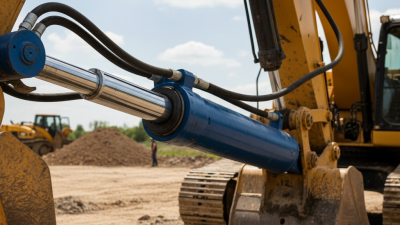
This guide examines leading manufacturers worldwide through practical and technical criteria. These include design capability, material selection, sealing technology, production quality, testing procedures, customization options, and after-sales support. Factory experience matters. So does evidence. Strong suppliers should explain their manufacturing process, pressure-testing standards, inspection records, and application expertise clearly. Their products should suit construction machinery, agricultural equipment, industrial systems, mining applications, and other heavy-duty environments.
Performance matters. However, no ranking is perfect. Different users require different bore sizes, stroke lengths, mounting styles, operating pressures, and delivery schedules. A manufacturer that serves large excavator projects may not be ideal for a compact industrial system. This overview therefore focuses on verifiable strengths rather than simple popularity. It also recognizes that supplier information can change, especially regarding certifications, production capacity, and regional service coverage. Buyers should confirm current specifications directly before making a purchase. Careful comparison remains essential, because a small sealing flaw can cause leakage, downtime, and expensive maintenance. The best manufacturers combine engineering discipline with transparent communication and consistent quality control. That balance supports safer equipment, longer service life, and more predictable operating costs in 2026.
Hydraulic cylinder manufacturing in 2026 covers more than machining barrels and assembling seals. The global field includes engineering firms, component specialists, contract producers, and regional service workshops. Buyers now assess design control, traceability, testing capacity, and after-sales repair support. In practical audits, factory layout often reveals more than a polished brochure. Look closely. Are honing records available? Are pressure tests logged by serial number? These details indicate whether stated quality can be repeated.
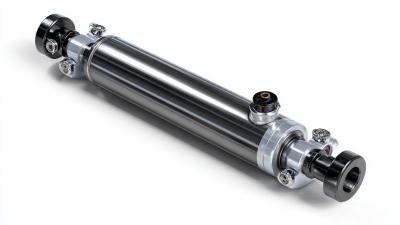
The market spans single-acting, double-acting, telescopic, tie-rod, welded, and mill-duty cylinders. Each type serves a different duty cycle, space limit, and maintenance expectation. Telescopic designs suit tipping equipment with limited installation length. Welded cylinders often handle demanding mobile applications and high side loads. Tie-rod models support modular replacement in many industrial systems.
Specification should begin with force, stroke, mounting, speed, and fluid compatibility. A larger bore is not automatically better. It can increase weight, cost, and energy demand. Good engineering balances these trade-offs against actual operating conditions.
Market comparison needs more than shipment volume. Relevant metrics include production capacity, order lead time, export share, testing throughput, warranty claims, and repair turnaround. Analysts may also track demand across construction, agriculture, material handling, energy, and factory automation. Public forecasts deserve careful reading. Definitions vary between revenue, units, and installed value. Some datasets combine complete cylinders with replacement parts, weakening direct comparisons. Verified test evidence and customer-use data are often more useful than rankings. Still, no supplier is perfect. Seal life can change sharply with contamination, temperature, or poor alignment. That uncertainty should remain visible in any 2026 manufacturer assessment.
2026 Best Hydraulic Oil Cylinder Manufacturers Worldwide
ISO 6020/2 at 160 Bar and ISO 6022 at 250 Bar: Key Standards
ISO 6020/2 defines metric mounting dimensions for hydraulic cylinders rated at 160 bar. ISO 6022 covers heavier-duty designs rated at 250 bar. These ratings guide selection, but they do not replace application testing. A cylinder’s real performance depends on pressure peaks, rod loading, oil cleanliness, temperature, and mounting alignment.
Industry data supports this growing demand. Grand View Research estimated the global hydraulic cylinders market at approximately USD 15.9 billion in 2023, with continued expansion through 2030. MarketsandMarkets also projected strong growth, driven by construction equipment, industrial automation, and agricultural machinery. The numbers look encouraging. Yet market growth does not guarantee dependable engineering.
In practical inspections, incorrect pin alignment often causes uneven seal wear and rod scoring. ISO 6020/2 may suit compact machinery with controlled loads. ISO 6022 is more appropriate for demanding circuits and frequent pressure shocks. Engineers should verify fatigue life, flange strength, piston speed, and emergency-stop conditions. A 250-bar label alone is not a complete safety argument. That distinction is easy to miss. Test results should include pressure cycling, leakage checks, dimensional verification, and material traceability. Incomplete documentation remains a surprisingly common weakness. Industry reports measure market value, not every cylinder’s field reliability.
| Evaluation Dimension | ISO 6020/2 Series | ISO 6022 Series | Purchasing and Engineering Significance |
|---|---|---|---|
| Standard family | ISO 6020/2 | ISO 6022 | Confirm that the supplier’s dimensional drawings and product documentation explicitly identify the applicable ISO series. |
| Nominal pressure rating | 160 bar 16 MPa Approximately 2,321 psi |
250 bar 25 MPa Approximately 3,626 psi |
These are nominal series pressure values, not permission to exceed the complete cylinder assembly’s rated operating limits. |
| Primary design category | Metric, single-rod hydraulic cylinders in the 16 MPa series; mounting dimensions are defined by the standard. | Metric, single-rod hydraulic cylinders in the 25 MPa series; mounting dimensions are defined by the standard. | The standard supports dimensional interchangeability only where the selected bore, rod, mount, stroke and accessory dimensions match. |
| Typical duty positioning | Medium-pressure industrial hydraulic applications. | Higher-pressure industrial and mobile-equipment applications. | Select the pressure series according to actual load, shock loading, duty cycle and safety margin—not pressure rating alone. |
| Theoretical extension force at 50 mm bore | 31.4 kN at 160 bar | 49.1 kN at 250 bar | Calculated using F = p × A; excludes friction, pressure losses, seal drag and dynamic effects. |
| Theoretical extension force at 80 mm bore | 80.4 kN at 160 bar | 125.7 kN at 250 bar | Use the effective piston area and actual system pressure for final sizing. |
| Theoretical extension force at 100 mm bore | 125.7 kN at 160 bar | 196.3 kN at 250 bar | Actual usable force may be lower because of efficiency, piping losses and operating conditions. |
| Force calculation basis | F = p × πD² ÷ 4 p = 16 MPa |
F = p × πD² ÷ 4 p = 25 MPa |
Bore diameter is represented by D. Retraction force must account for rod-area displacement. |
| Mounting compatibility | Verify mount type, mounting dimensions, centerline height, port location and rod-end geometry. | Verify mount type, mounting dimensions, centerline height, port location and rod-end geometry. | A cylinder should not be treated as a direct replacement unless all interface dimensions are confirmed. |
| Stroke specification | Project-specific; confirm stroke, retracted length, extended length and allowable side load. | Project-specific; confirm stroke, retracted length, extended length and allowable side load. | ISO series selection does not determine the required stroke. Stroke must be calculated from the machine motion. |
| Rod sizing considerations | Select rod diameter for buckling, bending, fatigue and impact loads. | Select rod diameter for buckling, bending, fatigue and impact loads, with greater attention to high-pressure duty. | Pressure rating alone does not establish rod strength or allowable compression load. |
| Cushioning requirement | Specify adjustable or fixed cushioning when the piston approaches end of stroke at significant speed. | Specify adjustable or fixed cushioning when the piston approaches end of stroke at significant speed. | Cushion selection depends on moving mass, velocity, cycle frequency and available deceleration distance. |
| Hydraulic fluid and seal selection | Confirm mineral-oil compatibility, temperature range, cleanliness level and seal material. | Confirm mineral-oil compatibility, temperature range, cleanliness level and seal material. | Fluid compatibility and temperature limits must be obtained from the selected cylinder configuration. |
| Quality evidence to request | Dimensional drawing, material specifications, pressure test record, coating details and traceability documents. | Dimensional drawing, material specifications, pressure test record, coating details and traceability documents. | Review documented evidence rather than relying only on a stated pressure value or standard reference. |
| Recommended supplier comparison fields | Lead time, minimum order quantity, customization capability, warranty terms and service coverage. | Lead time, minimum order quantity, customization capability, warranty terms and service coverage. | Use the same technical specification and acceptance criteria when comparing suppliers worldwide. |
The 2024 MarketsandMarkets report estimates the hydraulic cylinder market will grow from about USD 15 billion to over USD 20 billion by 2029. That growth raises the standard for worldwide manufacturers. Strong design begins with load calculations, buckling analysis, and realistic duty cycles. A cylinder rated for 250 bar still needs stable performance under shock loads. Bore diameter, stroke length, mounting style, and rod speed must match the machine, not a generic catalog.
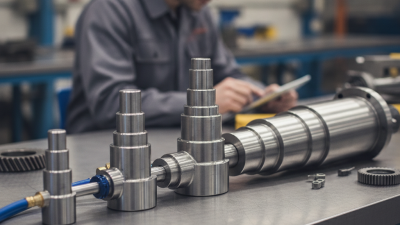
Materials reveal manufacturing discipline. Induction-hardened rods, properly honed tubes, and corrosion-resistant coatings can reduce wear in dusty or wet environments. Seal selection also matters. Temperature, fluid compatibility, contamination, and storage time affect service life. Testing should include proof pressure, leakage inspection, fatigue cycling, dimensional checks, and cleanliness control. ISO 4413 provides useful principles for hydraulic-system safety and risk reduction. Traceable test records make those claims more credible.
Customization separates capable suppliers from simple assemblers. Useful options include integrated position sensors, specialized ports, compact mounting, welded construction, and application-specific seals. One 2024 Grand View Research assessment also identifies construction, agriculture, and industrial equipment as major demand areas. Their operating conditions differ sharply. That matters.
A weakness remains. Some manufacturers overvalue pressure ratings and undervalue maintenance access. Field experience often exposes this gap. Engineers should request load histories, material certificates, test tolerances, and failure feedback before approving production. The cheapest quotation may hide expensive downtime. Not always, but often.
Choosing a hydraulic oil cylinder manufacturer in 2026 requires more than comparing catalog prices. In field inspections, capacity often looks impressive, yet working pressure, stroke length, and duty cycle reveal the real limit. Ask for tested load curves, not rounded marketing figures. Bore size affects force, oil flow, and installation space. A larger bore may deliver stronger output, but it can slow movement and increase fluid demand. Measure the machine first. Small errors become expensive rework.
Delivery deserves the same scrutiny. Request a written lead time for standard and custom cylinders, including drawing approval, machining, testing, and export packing. A reliable supplier shares production milestones and keeps replacement seals available. I have seen projects delayed by one missing seal kit. It was a small part. Check factory capacity during peak seasons, not only normal weeks. Regional service technicians, clear troubleshooting guides, and responsive engineering support matter when a cylinder starts drifting or overheating.
Certifications should match the application and destination market. Verify current certificates, inspection records, material traceability, weld procedures, and pressure-test results directly with the manufacturer. Generic certificates are not enough. Service quality also appears in failure handling: root-cause reports, repair instructions, and realistic warranty terms show operational maturity. One caution remains: supplier questionnaires can hide gaps. Inspect samples, review references, and compare delivered cylinders against approved drawings. No evaluation is perfect, and my own early comparisons sometimes valued capacity over maintainability. That mistake is worth avoiding.
Selecting a 2026 hydraulic cylinder manufacturer requires more than comparing catalog prices. Start with the working conditions: pressure, stroke length, mounting space, cycle frequency, temperature, and fluid type. A cylinder for a steel press faces very different demands from one used on a mobile excavator.
Ask manufacturers for engineering drawings, material specifications, pressure-test records, and traceability documents. Reliable suppliers can explain rod coatings, barrel tolerances, seal selection, and fatigue resistance in clear language. They should also confirm production standards, inspection methods, and quality certifications. Do not accept vague claims.
Request samples or verified case references from similar industrial applications. Look for evidence of consistent dimensions, clean welds, smooth rod movement, and stable performance after repeated cycles. A serious manufacturer should discuss failure analysis, spare seals, repair support, and realistic delivery times. Fast delivery sounds attractive, but rushed testing can create expensive downtime.
Communication matters more than many buyers expect. Engineers should answer technical questions without hiding behind sales language. Ask how design changes are reviewed and recorded. Confirm warranty limits in writing. Small details matter.
It is easy to choose the lowest quotation. That choice may prove costly when contamination, side loading, or heat appears on site. I would also avoid selecting a supplier only because its website looks advanced. A polished presentation cannot replace measurable test data, practical experience, and accountable after-sales service.