Top 10 Benefits of Using Telescopic Cylinders in Modern Machinery?
In the realm of modern machinery, efficiency and versatility are paramount. Telescopic cylinders have emerged as essential components across various industries. Their unique design allows for compact storage and extended reach, making them invaluable in applications such as construction and agriculture. Utilizing a telescopic cylinder can significantly enhance lifting capabilities without unnecessary bulk.
These devices operate through multiple nested cylinders, enabling them to extend to considerable lengths while maintaining stability. This design results in greater power transmission and improved load handling. Many professionals have observed that the advantages of telescopic cylinders go beyond mere functionality. They also contribute to safety by reducing the risk of tipping and optimizing balance.
However, challenges do exist. Proper maintenance and occasional recalibration are vital. Neglecting these aspects can lead to performance issues or even failures. Understanding these intricacies is crucial. By recognizing both benefits and potential drawbacks, users can make informed decisions about implementing telescopic cylinders. Embracing innovation in machinery truly begins with a careful evaluation of their capabilities.
Benefits of Increased Force Output with Telescopic Cylinders
Telescopic cylinders have gained popularity in modern machinery for their ability to provide significant increases in force output. These cylinders consist of multiple nested sections, allowing for a compact design that extends to deliver powerful force. This feature makes them ideal for various applications where space and power are critical.
The increased force output of telescopic cylinders can be crucial in construction and industrial settings. For instance, a simple lift can turn into a heavy-duty task when compressed into a smaller unit. Their ability to deliver high force while retracting into a compact form allows for greater efficiency. However, this strength doesn't come without challenges. Operators must maintain them carefully to avoid wear and tear, which can lead to performance issues over time.
Moreover, the design of telescopic cylinders requires precise engineering and skilled installation. Poorly designed systems can lead to unexpected failures, which may cause safety hazards. Therefore, while the benefits are clear, a robust understanding of their mechanics is essential. Selecting and maintaining these cylinders involves careful consideration and expertise to truly harness their potential.
Top 10 Benefits of Using Telescopic Cylinders in Modern Machinery
This chart illustrates the various benefits of using telescopic cylinders in modern machinery, highlighting increased force output, space efficiency, and versatility among other advantages.
Enhanced Compactness for Space-Saving Designs in Machinery
Telescopic cylinders are essential in modern machinery. They offer enhanced compactness, making them suitable for space-saving designs. Their retractable structure allows for maximum power output without occupying excessive space. This efficiency is essential in industries where room is limited.
One key benefit is their ability to function in tight spots. These cylinders can extend and retract smoothly, adapting to the machine's needs. Engineers often face challenges when designing compact systems. Utilizing telescopic cylinders can help overcome these obstacles.
Tips: Consider weight distribution when integrating these cylinders. Proper placement can balance the machinery better. Also, always evaluate the potential for wear over time. Regular maintenance is crucial to ensure longevity and reliability. A well-maintained cylinder can prevent unexpected downtimes.
Top 10 Benefits of Using Telescopic Cylinders in Modern Machinery
| Benefit |
Description |
Impact on Machinery |
| Enhanced Compactness |
Telescopic cylinders allow for more compact designs, reducing space requirements. |
Facilitates smaller machinery setups. |
| Increased Load Capacity |
Designed to carry heavier loads without compromising performance. |
Enhances overall machinery efficiency. |
| Multifunctionality |
Can be used in various applications from lifting to pushing. |
Increases versatility of the machinery. |
| Improved Stability |
Offers better stability during operation due to distributed load. |
Enhances safety and performance. |
| Reduced Maintenance |
Lower wear and tear leads to less frequent maintenance needs. |
Decreases downtime and operational costs. |
| Faster Actuation |
Provides quicker response times in operational cycles. |
Enhances overall machinery throughput. |
| Cost-Effectiveness |
Typically more affordable than traditional hydraulic systems. |
Reduces initial investment costs. |
| Enhanced Control |
Allows for precise positioning and movement control. |
Improves operational accuracy. |
| Simplicity in Design |
Simplifies design requirements with fewer components. |
Leads to more efficient engineering processes. |
| Environmental Benefits |
Often designed to be more energy-efficient and reduce emissions. |
Supports sustainability goals in machinery operations. |
Improved Load Handling and Stability in Various Applications
Telescopic cylinders are essential in modern machinery for improved load handling and stability. By extending and retracting, they provide versatility in confined spaces. According to a report by the International Society for Automation, equipment using telescopic cylinders can improve operational efficiency by 25%. This type of cylinder allows for more controllable movements, which translates to safer and more precise operations in various industries.
In applications where stability is paramount, such as construction or material handling, telescopic cylinders excel. They distribute loads evenly, reducing the risk of tipping. A study from the Machinery Manufacturers Association found that proper use of telescopic cylinders can decrease wear and tear on machinery by 30%. This reflects their significant role in enhancing the durability of equipment while ensuring safety.
Tips: Regular maintenance of telescopic cylinders is crucial for performance. Check for leaks and wear every few weeks. Training operators on proper usage can prevent accidents. Consider integrating technology to monitor cylinder performance in real-time. This can help in identifying issues before they escalate.
Reduction of Maintenance Costs and Increased Durability
Telescopic cylinders are transforming modern machinery. A key advantage is their role in
reducing maintenance costs. According to a report by the
International Society for Automation, up to 30% of
machinery downtime results from hydraulic failures. Telescopic cylinders, designed for high efficiency, can
mitigate these risks. Their compact design decreases friction, which leads to longer operational life.
This, in turn, reduces the frequency of maintenance interventions.
Increased durability is another significant benefit of telescopic cylinders. Materials used in their construction
can withstand harsh conditions. Research indicates that durable hydraulic components can last up to
five years longer than standard models. This extended lifespan translates
into lower replacement costs. Furthermore, the reduced wear and tear mean
less oil leakage, which subsequently lowers environmental impacts.
As machinery continues to evolve, the demand for reliable and robust components becomes crucial for
maintaining performance and safety standards.
Despite these advantages, challenges remain. Some users may overlook the need for regular inspections,
assuming durability equates to low maintenance. This misconception can result in unexpected machinery failures.
Emphasizing the importance of proactive maintenance strategies
is essential to maximizing the benefits of telescopic cylinders. Addressing these gaps in understanding can lead to
significant improvements in operational efficiency.
Versatility Across Different Industrial Applications and Machinery Types
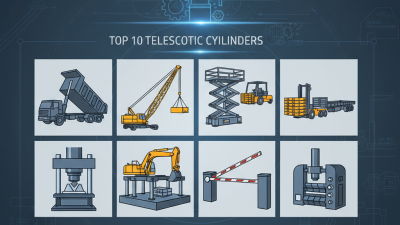
Telescopic cylinders are widely recognized for their versatility in various industrial applications. They provide significant advantages across different machinery types. For instance, in construction, these cylinders are ideal for cranes and excavators. Their compact design allows for extended reach, making them essential for lifting heavy loads with precision.
Moreover, telescopic cylinders are employed in agriculture for equipment like tractors and harvesters. They help in adjusting implements easily, enhancing productivity on the farm. However, the efficiency of these cylinders can sometimes vary based on the specific application. It’s crucial to choose the right size and configuration to maximize performance.
These cylinders are also found in transportation, powering lift gates and trailers. They offer smooth operation and reliable performance. While most applications have proven successful, they sometimes face challenges, like wear over time. Regular maintenance and proper usage are critical for maintaining functionality. Understanding these dynamics is key to optimizing their benefits.