index-bg-11

China Top Telescopic Cylinders Underbody Manufacturers?

Choosing China’s top Telescopic Cylinders Underbody manufacturers requires more than comparing prices. Buyers should examine engineering depth, material control, testing practices, and field performance. Underbody cylinders work beneath demanding vehicles. They face vibration, road debris, moisture, uneven loading, and repeated extension cycles. A polished catalog cannot prove long-term reliability.

Hydraulic engineer Peter Nachtwey offers a useful working principle: “Control the load first; size the actuator second.” This idea matters when evaluating Chinese suppliers. A capable manufacturer should explain bore dimensions, stroke length, working pressure, retracted height, mounting design, sealing systems, and corrosion protection. It should also provide inspection records and realistic service data. Certifications help, but they do not replace technical conversations or sample testing.

Details reveal practical experience. Look for hardened rods, stable welding, clean hydraulic passages, and seals suited to temperature changes. Ask whether the cylinder was tested under tilted loads, not only in a clean workshop. Check how quickly the supplier responds to drawings and failure reports. Communication can expose weakness.

The “top” supplier is not always the largest factory. Sometimes, a smaller specialist offers better customization and closer quality control. That judgment remains imperfect. Public information may be incomplete, and product claims can sound stronger than field evidence. Therefore, this guide compares manufacturers through verifiable capabilities, application knowledge, and buyer-focused performance. The goal is not to praise every supplier. It is to identify partners that can support safe, durable, and serviceable Telescopic Cylinders Underbody solutions for demanding commercial vehicles.
China Top Telescopic Cylinders Underbody Manufacturers?

What Are Telescopic Cylinders for Underbody Applications?

What Are Telescopic Cylinders for Underbody Applications?

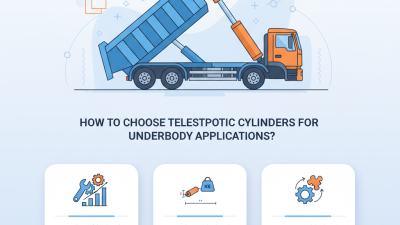
Telescopic cylinders are hydraulic actuators built with two or more nested stages. They extend to create a long stroke from a short, compact body. This design suits underbody equipment, where installation space is limited but lifting movement remains essential.

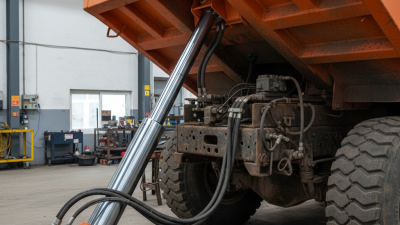
In practical use, these cylinders support dump bodies, mobile platforms, recovery systems, and other vehicle-mounted mechanisms. A hydraulic pump sends pressurized oil into the cylinder. Each stage extends in sequence, producing controlled movement and useful lifting force. When retracted, the stages slide inside one another beneath the vehicle frame. Good designs use strong steel, sealed joints, and carefully machined surfaces. However, a longer stroke can increase side-load sensitivity. This detail is sometimes overlooked during early selection.

Tips: Check the closed length, extended length, rated pressure, mounting angle, and load direction before ordering. Measure the available underbody clearance with suspension movement included. Ask the manufacturer for load charts, material details, seal specifications, and pressure-test records. A cylinder that fits on paper may still contact the frame during operation. Field experience matters here.

For buyers comparing telescopic cylinder manufacturers in China, quality control deserves close attention. Reliable production should include dimensional inspection, welding checks, cleanliness control, and functional testing. Request samples or inspection reports when possible. It is also wise to confirm replacement seal availability and technical support. Specifications can look perfect, yet real installation may reveal vibration, uneven loading, or slow retraction. These issues deserve honest review before volume purchasing.

How Do Underbody Telescopic Cylinders Work?

How Do Underbody Telescopic Cylinders Work?

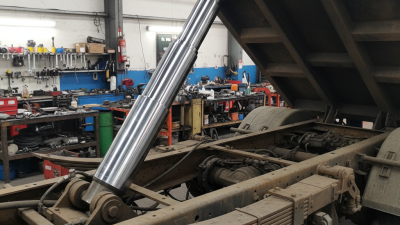
Underbody telescopic cylinders lift a dump body through several nested steel stages. Hydraulic fluid enters the cylinder under controlled pressure. The smallest stage usually extends first, creating initial lifting force. As the body rises, larger stages continue the movement. Their combined stroke provides substantial lifting height from a compact installation space.

When the operator lowers the body, a directional valve releases fluid through the return line. Gravity pushes the stages inward, while hydraulic flow controls the descent speed. Seals prevent leakage around each polished stage. Guide rings reduce side movement, and a relief valve limits dangerous pressure spikes. The chassis bracket must also handle changing angles and loads during tipping.

From practical inspection work, alignment matters as much as cylinder diameter. A slightly twisted mounting point can cause uneven wear, noise, or slow retraction. Clean hydraulic oil matters too. Small metal particles may damage seals before the problem becomes visible. Manufacturers in China commonly test pressure retention, stroke accuracy, surface hardness, and weld quality before shipment. These checks improve reliability, but they cannot replace correct installation.

No design is perfect. Temperature changes affect oil viscosity, and overloaded bodies create extra stress. I would recheck hose routing after the first operating cycle. It is an easy step to overlook. An underbody cylinder works best when its hydraulic circuit, mounting structure, and maintenance schedule are treated as one system.

Key Features of China’s Leading Manufacturers

China’s leading underbody telescopic cylinder manufacturers combine large-scale production with practical engineering experience. Their teams study tipping angles, body clearance, payload, and working pressure before recommending a cylinder. This field-based approach matters because a few millimeters can affect chassis movement. Many factories use high-strength steel tubes, precision-honed bores, and hard-chromed rods. These choices reduce friction and help resist wear in dusty work environments. Not every project needs the largest cylinder. Correct sizing matters more.

Reliable manufacturers maintain controlled welding, machining, and assembly processes. They inspect bore dimensions, rod straightness, seal fit, and oil leakage at several stages. Pressure testing under realistic loads provides stronger evidence than a catalog claim. Some suppliers also offer material certificates, dimensional reports, and batch traceability. This documentation helps fleet operators investigate failures instead of guessing. Sealing systems are selected for temperature, oil type, and cycle frequency. Cheap seals may perform well briefly, then disappoint.

Customization is another key feature. Engineers can adjust stroke length, mounting eyes, retracted length, port position, and surface treatment for different dump bodies. Technical drawings and sample approval reduce misunderstandings between overseas buyers and production teams. Responsive manufacturers explain limits clearly, including service intervals and installation requirements. That honesty is valuable. Still, quality can vary between factories, and inspection should not be skipped. An independent pre-shipment check can confirm dimensions, test pressure, packaging, and labeling before delivery. Better communication usually prevents expensive rework.

China Top Telescopic Cylinder Manufacturers: Key Pressure Classes

Rated pressures of 160, 210, and 250 bar are commonly used reference classes when specifying hydraulic telescopic cylinders for dump trucks and other underbody applications. Actual ratings depend on cylinder design, sealing system, material selection, safety factors, and application requirements. The chart presents industry reference values rather than data from any individual company or brand.

How to Compare Chinese Underbody Cylinder Suppliers

China Top Telescopic Cylinders Underbody Manufacturers?

Comparing Chinese underbody cylinder suppliers requires more than reading a price list. Check the cylinder’s bore, stroke, closed length, lifting angle, and rated working pressure. These dimensions must match your chassis and tipping body. Ask for material certificates, welding procedures, and inspection records. The details matter. A reliable supplier should explain sealing choices, surface treatment, and expected service cycles in clear language.

Request a sample or small pilot order before approving volume production. Measure pin alignment, extension speed, oil leakage, and retraction under realistic load conditions. Review pressure-test results and documentation for each production batch. Factory audits can reveal useful details, including machining accuracy, cleanliness, storage conditions, and spare-part control. Do not depend only on photographs. They can hide weak processes. Video inspections help, but an independent inspection is more dependable.

Compare response time, drawing support, packaging quality, and warranty terms beside the unit price. A supplier that answers technical questions quickly may reduce costly installation delays. Confirm export experience, labeling, replacement seals, and after-sales communication. One purchasing mistake is accepting a broad load claim without checking operating conditions. Temperature, hydraulic oil, road vibration, and uneven loading can change performance. I would also question unclear test data. It may indicate poor control, though not always. A practical comparison sheet should record every specification, test result, lead time, and agreed correction before signing.

China Top Telescopic Cylinders Underbody Manufacturers? - How to Compare Chinese Underbody Cylinder Suppliers
Comparison Dimension What to Compare Common Technical Reference Evidence to Request from the Supplier
Cylinder Configuration Number of stages, telescopic arrangement, mounting orientation, and compatibility with underbody tipping systems. 3–6 stages Front or rear mounting Single-acting designs Approved dimensional drawing, installation instructions, stage sequence diagram, and application reference with equivalent body capacity.
Rated Working Pressure Continuous operating pressure and maximum permissible pressure under the proposed hydraulic system. Many heavy-duty hydraulic tipping systems are designed around approximately 16–25 MPa working pressure, depending on the cylinder design and vehicle system. Technical datasheet showing working pressure, test pressure, pressure relief requirements, and compatibility with the truck hydraulic circuit.
Rated Lifting Capacity Maximum lifting force at the specified pressure, stroke position, mounting angle, and load distribution. Capacity must be calculated from effective piston area, hydraulic pressure, lever geometry, and the tipping-body center of gravity; a single tonnage figure is not sufficient for comparison. Load calculation, force diagram, rated payload conditions, and test results for the intended vehicle configuration.
Stroke and Closed Length Whether the cylinder fits the available underbody space while providing the required tipping angle. Stroke and closed length vary substantially by vehicle model and body volume. The correct comparison must use millimetre-based drawings rather than nominal model descriptions. 2D or 3D CAD drawing including stroke, closed length, outer diameter, mounting-hole dimensions, oil-port position, and clearance envelope.
Material and Surface Treatment Tube, piston rod, stage material, guide components, weld quality, and corrosion protection. Typical features include honed or precision-finished cylinder tubes, chrome-plated piston rods, alloy-steel stages, and painted or coated external surfaces. Material certificates, plating-thickness records, hardness data, coating specification, and sample inspection report.
Sealing System Seal materials, temperature range, wear resistance, compatibility with hydraulic oil, and ease of replacement. Common hydraulic seal materials include polyurethane, nitrile rubber, and fluorocarbon rubber; the correct choice depends on oil type, temperature, pressure, and duty cycle. Seal brand-independent material specification, temperature range, oil-compatibility statement, spare-seal list, and leakage test procedure.
Manufacturing Accuracy Dimensional tolerances, concentricity, surface roughness, welding consistency, and stage movement smoothness. Important inspection points include tube bore accuracy, rod straightness, seal-groove dimensions, mounting alignment, and smooth extension/retraction without sticking. Inspection plan, calibrated measurement records, bore and rod inspection data, welding procedure, and nonconformance-control process.
Pressure and Leakage Testing Proof-pressure testing, static leakage, internal bypass, and retraction performance before shipment. Every finished cylinder should undergo documented pressure and function testing. Test pressure and holding time must be specified in the purchase agreement. Serial-number-linked test report showing test pressure, holding time, extension/retraction cycle, external leakage result, and inspector approval.
Hydraulic Port and Mounting Compatibility Port thread standard, oil-port size, mounting pin diameter, pin spacing, and connection direction. Port and mounting dimensions must match the vehicle hydraulic circuit and chassis. Metric and inch thread standards should not be assumed interchangeable. Port-thread drawing, mounting tolerances, adapter requirements, installation photos, and confirmation of the applicable hydraulic standard.
Quality Management Process control, traceability, incoming inspection, final inspection, and corrective-action capability. A documented quality management system, commonly aligned with ISO 9001 principles, supports repeatable production but does not replace product-specific testing. Valid quality certificate, process-flow chart, inspection records, batch traceability method, and recent corrective-action example with confidential details removed.
Customization Capability Ability to modify stroke, closed length, mounting arrangement, port location, surface treatment, and seal package. Customization is practical when the supplier controls engineering, machining, welding, assembly, and testing in-house or through qualified audited partners. Engineering-change procedure, sample drawing revision history, prototype schedule, tooling responsibility, and first-article approval process.
Production and Delivery Planning Prototype lead time, repeat-order lead time, minimum order quantity, production capacity, and packaging method. Lead time depends on design approval, raw-material availability, machining load, surface treatment, testing, and export documentation. It should be quoted against an agreed specification. Written production schedule, capacity statement, milestone plan, packaging specification, and delivery performance records for comparable projects.
Warranty and After-Sales Support Warranty duration, exclusions, spare parts, technical response time, and failure-analysis procedure. A practical warranty should clearly define coverage for manufacturing defects, leakage, material faults, installation errors, overload, and maintenance responsibilities. Written warranty terms, spare-seal and replacement-parts pricing, troubleshooting guide, response-time commitment, and return or inspection procedure.
Total Cost of Ownership Purchase price plus freight, tooling, spare seals, maintenance, downtime risk, and replacement cost. The lowest quotation may have higher long-term cost if it excludes testing, corrosion protection, spare parts, engineering support, or compliant export packaging. Itemized quotation covering cylinder price, options, tooling, inspection, packaging, freight basis, spare parts, warranty, and payment terms.
Recommended Supplier-Selection Method Use a weighted technical and commercial score instead of comparing price alone. Technical compliance: 30% Quality evidence: 25% Delivery capability: 15% Total cost: 20% Service: 10% Issue the same specification and drawing to each candidate, compare like-for-like quotations, approve a sample, and complete a documented pre-shipment inspection.
Technical values must be confirmed against the vehicle chassis, tipping-body geometry, hydraulic pressure, payload, operating temperature, and applicable safety requirements before purchase.

Quality, Customization, and Export Considerations

China’s leading telescopic cylinder manufacturers for underbody systems compete on quality, customization, and export reliability. A 2024 MarketsandMarkets report valued the global hydraulic cylinder market at about USD 16 billion. Demand is supported by construction, mining, and heavy transport equipment. However, market size does not prove factory capability.

For underbody dump applications, inspect steel grade, chrome thickness, seal compatibility, and retracted length. A practical supplier should provide pressure-test records, surface-finish data, and load-cycle results. ISO 9001 certification helps, but it is only a starting point. Buyers should request samples under realistic tipping loads, including cold-weather testing. Customization may involve mounting brackets, oil ports, stroke length, paint systems, and sensor preparation. Export experience also matters. Check packaging methods, moisture protection, HS classification, spare-seal availability, and documentation accuracy. The World Bank’s Logistics Performance Index shows that shipment reliability strongly affects international supply chains. Delayed parts can cost more than a slightly higher cylinder price.

Tips: Ask for a dimensional drawing before ordering. Confirm working pressure, test pressure, and recommended oil. Request a video of final inspection, but do not rely on video alone. A factory may pass one batch and struggle with the next. That uncomfortable possibility deserves attention. Independent pre-shipment inspection can reveal uneven chrome plating, minor leakage, or incorrect ports before loading. Payment terms, warranty response time, and replacement procedures should be written clearly. A lower quotation is not always lower cost.