Top 10 Hydraulic Oil Cylinder Types for Global Buyers
Choosing the right Hydraulic Oil Cylinder is not simply a matter of comparing bore sizes or advertised pressure ratings. Global buyers must connect cylinder design with real operating conditions, maintenance practices, and local supply capabilities. A compact tie-rod cylinder may suit factory machinery, while a heavy-duty welded cylinder can better handle loaders, presses, or demanding mobile equipment.
This guide examines ten widely used hydraulic cylinder types and explains where each design performs best. It considers bore diameter, stroke length, mounting style, working pressure, sealing materials, corrosion protection, and service access. These details matter. A cylinder working beside a dusty quarry behaves differently from one installed in a clean indoor production line. Temperature also changes seal performance, oil viscosity, and expected service life.
The recommendations draw on common engineering practice and purchasing experience, but no universal “best” cylinder exists. Supplier data should be checked against drawings, test reports, and application requirements. Some low-cost options appear attractive until rod bending, leakage, or difficult repairs increase ownership costs. That lesson is easy to miss.
Buyers should also confirm material traceability, quality-control procedures, delivery consistency, and after-sales technical support. A reliable manufacturer can explain load calculations and provide practical installation guidance. The ten types below offer a useful starting point for comparison, not a substitute for professional design review. Small specification errors can become expensive failures. That deserves attention.
What Hydraulic Oil Cylinders Are and How They Work
Top 10 Hydraulic Oil Cylinder Types for Global Buyers
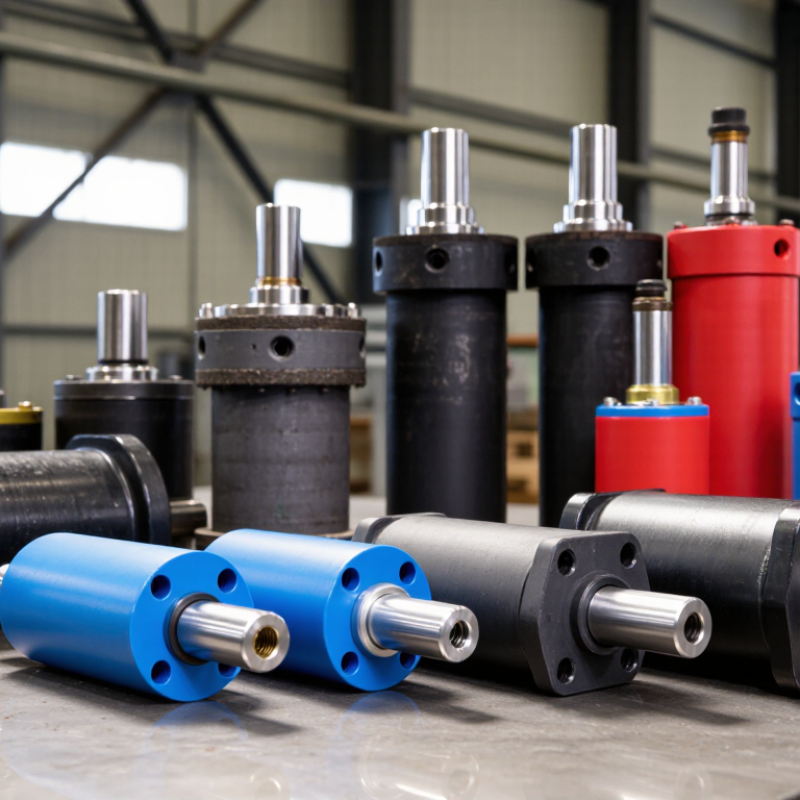
Hydraulic oil cylinders convert pressurized fluid into controlled linear motion. A pump sends oil into one chamber, pushing the piston and rod outward. Reversing the flow draws the rod inward. Seals guide this movement and prevent leakage around the piston and rod. Pressure, piston area, and flow rate determine force and speed. In practical equipment, small seal damage can reduce performance before operators notice it.
Common designs include single-acting, double-acting, telescopic, tie-rod, welded, mill-duty, plunger, tandem, differential, and custom cylinders. Single-acting models use hydraulic pressure in one direction and a spring or load for return. Double-acting cylinders use fluid on both sides, offering better control. Telescopic cylinders provide long strokes in limited spaces, but their nested stages require careful alignment. Welded cylinders suit compact machinery, while tie-rod types simplify servicing. These categories overlap. Choosing by name alone can be misleading.
Tips: Check operating pressure, stroke length, mounting style, oil compatibility, and expected side loads. Measure the retracted and extended dimensions carefully. Keep the rod protected from dust and impact. A slightly larger cylinder is not always safer; it may slow the machine or overload its structure. Ask for test records, seal material details, and dimensional drawings. In my experience, buyers often focus on force first and forget return speed. That small omission can cause expensive redesign work.
Top 10 Hydraulic Oil Cylinder Types for Global Buyers - What Hydraulic Oil Cylinders Are and How They Work
| No. | Hydraulic Cylinder Type | How It Works | Main Structural Features | Typical Applications | Key Advantages | Important Limitations |
|---|---|---|---|---|---|---|
| 1 | Single-Acting Cylinder | Hydraulic pressure moves the piston in one direction. A spring, gravity, external load, or mechanical linkage returns the rod. | One powered fluid port, piston, rod, barrel, seals, and a return mechanism or external return load. | Dump bodies, lifting platforms, jacks, compact presses, clamps, and agricultural equipment. | Simple plumbing, lower cost, and reduced valve complexity. | Powered movement is available in only one direction; spring-return versions have limited usable stroke and force. |
| 2 | Double-Acting Cylinder | Pressurized oil is directed alternately to both sides of the piston to extend and retract the rod under hydraulic control. | Two fluid ports, piston, rod, cylinder tube, guide, seals, and end caps or a welded housing. | Excavators, loaders, steering systems, material-handling machinery, presses, and industrial automation. | Positive control in both directions, repeatable positioning, and adjustable speed. | Requires a two-line hydraulic circuit and careful control of return-side back pressure. |
| 3 | Telescopic Single-Acting Cylinder | Oil pressure extends several nested stages in sequence. Retraction normally occurs by gravity or an external load. | Multiple concentric sleeves with progressively smaller diameters, seals, wear rings, and a compact retracted length. | Truck tipping bodies, lifting platforms, mobile equipment, and applications requiring a long stroke in a short space. | Very long extension relative to the retracted length; useful where installation space is restricted. | Lower side-load tolerance, more complex sealing, and changing force and speed as stages extend. |
| 4 | Telescopic Double-Acting Cylinder | Hydraulic pressure controls both extension and retraction of multiple nested stages through dedicated internal or external oil passages. | Several sliding stages, specialized sequencing features, multi-stage seals, and ports arranged for two-way operation. | Mobile cranes, adjustable platforms, refuse equipment, handling systems, and controlled tilting mechanisms. | Long controlled stroke with powered movement in both directions. | Higher cost, more demanding maintenance, and greater sensitivity to contamination and alignment. |
| 5 | Plunger or Ram Cylinder | Hydraulic pressure acts on the end area of a large moving plunger, producing linear thrust; return is usually by gravity or an external force. | A plunger slides through a sealed head or gland and may have no conventional piston separating two fluid chambers. | Heavy lifting, hydraulic jacks, foundation equipment, presses, and low-speed high-force mechanisms. | High load capacity, robust construction, and suitability for long heavy-duty strokes. | Usually provides one powered direction and requires reliable guidance to manage side loads. |
| 6 | Differential Cylinder | The piston has unequal effective areas because the rod occupies part of one side. The resulting area difference produces different extension and retraction forces and speeds. | Conventional piston-and-rod design with a full piston area on one side and an annular rod-side area on the other. | General machinery, mobile hydraulics, lifting mechanisms, and systems where different working speeds are acceptable. | Straightforward design, efficient packaging, and reliable two-way operation. | Extension and retraction do not have equal force or speed; regeneration circuits may be needed for faster extension. |
| 7 | Tandem Cylinder | Two or more pistons are mechanically connected and supplied so their forces act in the same direction, increasing output force without using a larger bore. | Multiple cylinder sections arranged in line with connected rods or a common mechanical output arrangement. | Machine tools, compact presses, injection equipment, and applications with high force requirements and limited diameter space. | Higher force in a restricted bore diameter and useful force multiplication. | Longer overall housing, more seals and flow paths, and more demanding synchronization and maintenance. |
| 8 | Tie-Rod Cylinder | Pressurized oil moves the piston inside a tube, while external tie rods clamp the end caps and maintain the cylinder assembly. | Separate tube, end caps, piston rod, seals, and four or more external tie rods with nuts. | Factory automation, packaging machines, agricultural machinery, and general industrial equipment. | Serviceable construction, replaceable components, standardized mounting options, and convenient overhaul. | External rods can be exposed to impact or corrosion; it is generally less compact than a welded design. |
| 9 | Welded-Body Cylinder | Hydraulic pressure acts on the piston inside a permanently welded barrel assembly to create controlled linear motion. | Welded cylinder barrel, welded or integrated end connections, piston, rod, gland, wear guides, and hydraulic seals. | Construction machinery, forestry equipment, agricultural implements, refuse vehicles, and mobile systems. | Compact envelope, high strength-to-weight ratio, and good resistance to external loads and vibration. | Disassembly and repair can be more difficult; welding quality and alignment are critical. |
| 10 | Mill-Duty or Heavy-Duty Cylinder | A piston and rod convert hydraulic pressure into linear force, with the cylinder engineered for high loads, impact, heat, and continuous industrial duty. | Heavy wall construction, reinforced end closures, robust rod guidance, replaceable wear components, and high-temperature sealing options. | Steel mills, foundries, forging presses, heavy presses, industrial lifting systems, and severe-duty production lines. | High durability, improved resistance to shock loading, and suitability for demanding duty cycles. | Higher purchase weight and cost; correct cooling, sealing, alignment, and maintenance are essential. |
Related Posts
-
2026 Best Hydraulic Oil Cylinder Manufacturers Worldwide
-
2026 Best Hydraulic Oil Cylinder for Global Buyers?
-
How to Choose the Right Hydraulic Cylinder for Your Forklift Needs
-

2026 Top Telescopic Cylinder Trends and Innovations Explained
-
10 Best Hydraulic Cylinders for Trailer That Enhance Performance and Durability
-
Why Choose Telescopic Cylinders for Your Industry Needs?