What Is a Hydraulic Cylinder for an Excavator?
An excavator may weigh dozens of tonnes, yet much of its working force comes from a compact hydraulic assembly. The Hydraulic Cylinder For Excavator converts pressurized fluid into straight-line movement. It raises the boom, changes the arm’s reach, and curls the bucket through soil or broken rock. Look closely at a working machine: the chrome rod slides out, the boom lifts, and the bucket holds its position. Simple to watch. Demanding to engineer.
A cylinder typically includes a barrel, piston, rod, seals, and end connections. Hydraulic pressure acts on the piston, while seals help contain fluid and maintain force. Dimensions, pressure rating, mounting points, and operating conditions all matter when selecting or replacing one. A mismatch may cause slow movement, leakage, or unnecessary strain on connected components. The cylinder is important, but it is not the whole system. Pumps, valves, hoses, and maintenance matter too.
Industry reports provide useful context for this engineering work. UNEP and GlobalABC’s 2022 Global Status Report estimated that buildings and construction accounted for 37% of global energy- and process-related carbon dioxide emissions in 2021. That figure does not measure excavator-cylinder performance. It does, however, show why equipment efficiency deserves careful attention across construction. Off-Highway Research also tracks excavators and other machinery in its construction-equipment market studies, giving buyers and manufacturers a wider view of industry demand. Market data cannot tell you whether one cylinder suits one machine. That takes specifications, operating experience, and honest inspection. Even a well-built cylinder wears. The details matter.
Hydraulic Cylinder Definition and Role in an Excavator
What Is a Hydraulic Cylinder for an Excavator?
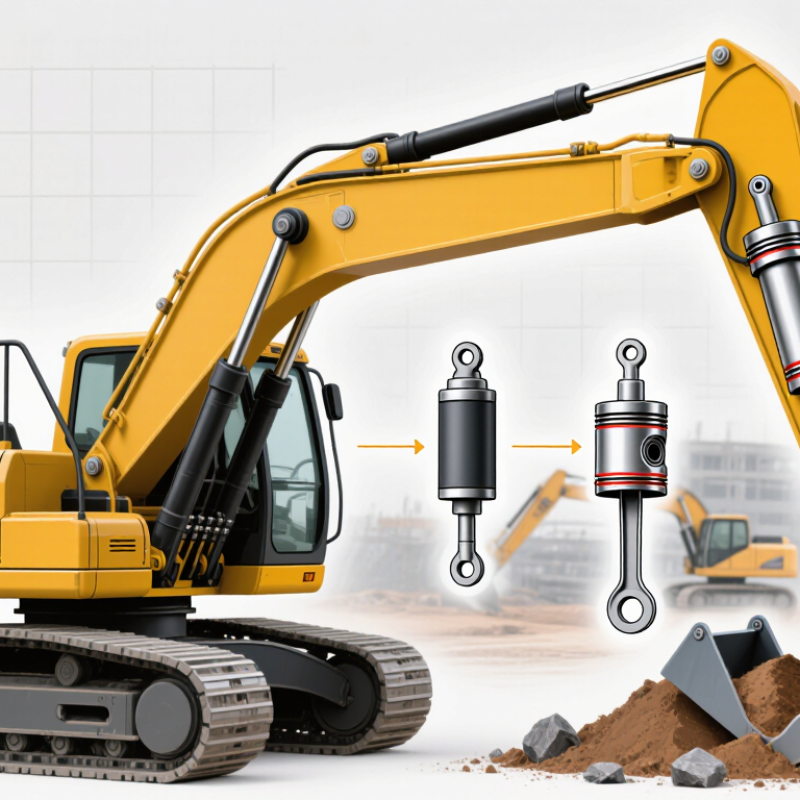
A hydraulic cylinder is a linear actuator that turns hydraulic pressure into pushing or pulling force. On an excavator, it moves key parts in a controlled direction. Inside the cylinder, pressurized oil acts on a piston, extending or retracting the attached rod. The main components include a barrel, piston, rod, and seals. The motion is direct, not rotary. It lets the boom rise, the arm reach, and the bucket curl or dump.
Each cylinder has a specific role within the excavator’s linkage. Boom cylinders lift and lower the boom, while arm and bucket cylinders control digging reach and bucket angle. Pins connect the cylinder to the machine’s structure, transferring force through the joints. A small leak can reduce performance, though wear may be internal and hard to spot. A visual check helps, but it cannot reveal every seal problem. That detail is easy to miss.
Tips: Check the exposed rod for scratches, rust, or oil after work. Keep dirt away from the rod and fittings during cleaning. If movement becomes uneven or noticeably slower, stop and arrange a proper inspection; don’t assume the cylinder is the only cause. Hydraulic issues can come from several parts of the system.
| What Is a Hydraulic Cylinder for an Excavator? — Definition and Role |
| Cylinder Type |
Typical Location |
Main Movement |
Role in Excavation |
How It Works |
| Boom cylinder |
Between the upper structure and the boom |
Raises and lowers the boom |
Positions the arm-and-bucket assembly and helps set digging height and reach. |
Pressurized hydraulic fluid moves a piston inside the cylinder. The piston rod extends or retracts to move the boom. |
| Arm cylinder |
Between the boom and the arm (also called the stick) |
Moves the arm toward or away from the machine |
Controls digging reach and helps pull material toward the excavator. |
Hydraulic pressure acts on the piston to extend or retract the rod, pivoting the arm at its joint. |
| Bucket cylinder |
Between the arm and the bucket linkage |
Curls and uncurls the bucket |
Controls bucket angle for digging, scooping, carrying, and dumping material. |
The rod moves a linkage connected to the bucket, converting the cylinder’s linear motion into bucket rotation. |
| Blade cylinder, where fitted |
At the front or rear blade assembly |
Raises or lowers the blade |
Positions the blade for backfilling, grading, or stabilizing the machine. |
Hydraulic pressure extends or retracts the cylinder rod to move the blade through its mounting linkage. |
| Hydraulic swing cylinder, on some compact excavators |
At the boom-swing mechanism |
Swings the boom sideways |
Lets the operator work beside the machine without repositioning the entire excavator. |
One or more cylinders move a linkage that turns the boom left or right; larger excavators commonly use a hydraulic motor for upper-structure rotation instead. |
| Core components |
Inside each hydraulic cylinder assembly |
Convert hydraulic energy into linear force and motion |
Transmit controlled force to the excavator’s boom, arm, bucket, or other hydraulic equipment. |
A typical cylinder includes a barrel, piston, piston rod, seals, and ports for hydraulic fluid. The control valve directs fluid to either side of the piston. |
Main Components of an Excavator Hydraulic Cylinder
What Is a Hydraulic Cylinder for an Excavator?
Main Components of an Excavator Hydraulic Cylinder
An excavator hydraulic cylinder converts pressurized fluid into straight-line force. It raises the boom, curls the bucket, or moves the arm. Its main parts work together inside a steel housing, where pressure and dirt can quickly expose weak seals or poor maintenance.
The cylinder barrel contains the piston, which separates the two fluid chambers. Pressure pushes the piston and attached rod outward or inward. The rod transfers that force to the excavator linkage through a pinned connection. Seals limit internal leakage, while the rod wiper helps keep grit out. End caps close the barrel, and ports carry hydraulic fluid in and out. Small parts matter. A damaged wiper can let fine dust score the rod surface. That damage may lead to leaks and costly downtime.
Grand View Research’s Hydraulic Cylinder Market Size, Share & Trends Analysis Report estimated the global market at USD 14.1 billion in 2022 and projected 4.3% annual growth from 2023 to 2030. This market figure reflects broad demand, not excavator-cylinder performance specifically. Tips: Inspect the exposed rod for scratches and oil film. Check pins and seals during routine service, and follow the machine maker’s pressure and fluid specifications. Don’t guess. A visual check helps, but it cannot confirm internal seal condition.
How Hydraulic Pressure Moves the Cylinder
What Is a Hydraulic Cylinder for an Excavator?
How Hydraulic Pressure Moves the Cylinder
An excavator cylinder turns hydraulic pressure into straight-line force. Oil from the pump enters one side of the piston, pushing it through the barrel; oil on the other side returns to the tank. The piston rod then moves the boom, arm, or bucket. Simple in principle. Not effortless in practice.
Pressure multiplied by piston area determines force. For example, at an illustrative 30 MPa, a 100 mm bore cylinder produces about 236 kN before friction and other losses. That figure is a calculation, not a universal excavator rating: actual pressure depends on the machine and circuit.
ISO 4413:2010, a widely used hydraulic-system safety standard, addresses pressure control and protection against excessive pressure. Relief valves matter. So do clean oil and sound seals.
When the operator moves a control, valves meter oil to the cylinder. More flow generally means faster movement; more pressure allows greater force, until the system’s limits intervene.
A scored rod or worn seal can let oil bypass the piston, reducing force and causing drift. A practical check is to watch whether a raised attachment slowly sinks with controls untouched. That observation alone cannot confirm the fault. Temperature, valve leakage, and load can also affect movement.
Common Cylinder Types and Their Functions
An excavator’s boom, arm, and bucket each rely on hydraulic cylinders, but their jobs differ. Boom cylinders lift the front assembly; arm cylinders control reach and digging depth; bucket cylinders curl or dump the bucket. Most are double-acting: pressurized oil moves the piston in both directions, giving the operator controlled force while digging and emptying. These cylinders usually use a single piston rod, with seals and wear rings guiding movement inside the barrel. Small leaks matter. A thin oil film on a rod can signal a damaged seal, though dust may hide the cause.
Cylinder design also reflects load and movement. Boom cylinders often work under heavy bending loads, while bucket cylinders face repeated impact near the cutting edge. A blade or dozer attachment may use shorter cylinders for raising and angling. The ISO 6022:2006 technical specification defines a 25 MPa nominal-pressure cylinder series; that figure is a design reference, not a universal excavator operating pressure. Actual ratings depend on the machine’s hydraulic system. ISO 4413:2010 also sets general requirements for hydraulic-system safety, including pressure control and protection from unexpected movement.
There is a practical trade-off. Larger cylinders can deliver more force, but they add weight and need more space. Cushioning near the stroke ends can reduce abrupt impacts, yet it cannot correct worn pins or poor alignment. Field diagnosis is rarely tidy. A cylinder may look sound and still drift under load.
Typical Hydraulic Cylinders on an Excavator
A conventional excavator attachment commonly uses two boom cylinders, one arm cylinder, and one bucket cylinder. The boom cylinders raise and lower the boom, the arm cylinder moves the arm, and the bucket cylinder curls or uncurls the bucket. Configurations vary by machine and attachment.
Operating Conditions, Wear, and Maintenance
What Is a Hydraulic Cylinder for an Excavator?
An excavator hydraulic cylinder turns pressurized oil into straight-line force. It moves the boom, arm, or bucket through a steel rod and piston. Its seals keep oil contained, while the cylinder barrel guides the piston under heavy loads.
Operating conditions strongly affect wear. Dust can score an exposed rod when it retracts, and gritty oil can damage internal seals. Repeated impact, side loading, or sudden pressure changes may also accelerate wear. A small oil film is not always a failure, but fresh drips, a scratched rod, or uneven movement deserve attention. A clean exterior cannot reveal every problem. Internal leakage may reduce lifting performance without leaving a puddle.
Tips: Inspect rods and hose connections during routine walk-arounds. Look for wet spots, dents, rust, and loose fittings. Keep the rod area clean, but avoid abrasive tools that can scratch its surface. Follow the machine’s service instructions for oil and seal checks. Before inspection or repair, lower the attachment and relieve hydraulic pressure as directed. Quick checks help, but they can miss internal bypass; that detail is easy to overlook.